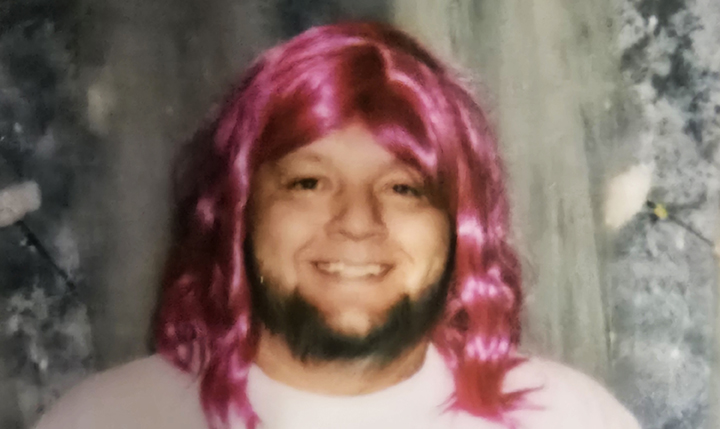
Cody Brennfoerder
June 2026
How odd is it to owe your journey to a bar of soap? It was just another weekend in early
2024 when I was going through my morning routine. There was just one change: I was
out of body wash and had to use a bar of soap. While soaping my chest, I noticed a
lump in my left breast at about 11 o’clock next to my nipple. I knew it was something to
be concerned about, and during an already scheduled doctor’s appointment the
following week, I mentioned it. They examined me and immediately scheduled for me to
have an appointment with the breast center to do an ultrasound/biopsy and
mammogram.
During the ultrasound and biopsy, it was discovered that I had an enlarged lymph node
under my left arm. One of the good things about modern medicine and technology is
that you can see your results online or in an app on your phone. The downside to this is
that sometimes you see your results before the doctor does. I saw the words Ductal
Carcinoma In Situ, and what is worse is the word that was next to this information.
Metastatic.
Now, the media loves to fetishize and embellish cancer on TV and in movies. Because
of this, when you see certain words, you immediately tend to think the worst. As soon as
I saw my diagnosis, I immediately spiraled and thought it was the end. How could this
be? I was only 34 and a guy!
However, I met with an amazing person, my nurse navigator assigned by the medical
center, she went over everything with me, and while yes, it was bad news, it was not as
horrible as I thought. She told me that it was stage 2a and was curable. This was
something we could fight! I immediately agreed to meet with their oncology team and
start fighting back. It was during this time that I began to research. What I found both
amazed and appalled me. Male breast cancer accounts for about 1% of the annual
diagnoses. Of those, the average age is between 60 and 70. I was half that!
I met with my oncologist, who advised me that, based on my markers and being HER2
positive, they were going to prescribe an aggressive cocktail for chemotherapy with two
drugs and an immunotherapy/antibody drug. I was told the side effects (hair loss,
nausea, change in taste, etc.), and at the end, he told me that this could kill me. I was
willing to take the risk. The plan was made: 6 rounds of chemo, surgery, then radiation. I
made the decision early on that, regardless of what happened, I would not let this get
me down. I work from home for a fintech company, and my managers and director all
told me the same thing. Don’t worry about your job and projects. You take care of you.
My family was devastated and rallied around me (with my parents, my aunt, and uncle
traveling to stay with me to help around the house when I was too sick or exhausted to
take care of things.
I began chemo in April, and by early May, my hair began to fall out.
I decided to have fun with it. I began making the joke that I was saving money on
shaving cream, shampoo, and razors. I bought several wigs of different lengths and
colors and began wearing them to my chemo and oncology appointments. My friends
and I would make low-brow and occasionally dark jokes about my diagnosis. Humor of
many forms is what helped me get through things. I believe that this is not just a
physical battle but a mental and spiritual battle. You must think positively and have the
philosophy that no matter what, you will not let this win, and you will fight to the end.
It’s fine to feel down some days, but regardless, you must pull yourself up. As soon as you
begin to give up, so too does your body.
Again, the media brings this idea that chemotherapy immediately makes you sick. You
see a person sitting in the chair with the IV dripping, then it cuts to them being sick and
vomiting into the toilet. That isn’t the case. While yes, that can happen, it is not always
the case, and not an immediate reaction. It was about a week after the first infusion
when I noticed my taste and smell sensitivity changing. Things that I loved began to
taste bland or awful. Eventually, I could only stomach certain things, and some scents
would make me nauseous. With chemotherapy came very low cell counts and fatigue.
Just moving around the house was exhausting. I was prescribed a bone marrow
stimulant to help with my cell counts. This did help significantly, but came with a
tradeoff: bone inflammation and pain. I had genetic testing done and learned I had no
markers or indicators that showed risks or predisposition to specific cancers (breast,
colon, prostate, etc.).
Outside of the previously mentioned effects, I rarely got nauseous and appeared to be
responding well to the treatments. In August of 2024, my scan showed clear, and the
chemotherapy had worked! I was over the moon, and I met with the surgeon. He
mentioned that there were no really defined guidelines for a mastectomy in men, so
they have to tailor based on the guidelines of a female mastectomy. This stuck with me.
I know this is a rare diagnosis, but surely the medical community was documenting and
coming up with guides, methods, and procedures for when this occurs in men… I
decided to do a bilateral mastectomy. I was not taking the chance, and this later turned
out to be a great decision…
During my recovery, the surgeon informed me that the lymph nodes were matted under
my left arm and he had to remove an orange-sized chunk out of my arm to ensure he
got them all. The news got worse: the scan was wrong, and my left breast tissue and
lymph nodes were still positive for cancer, and I was beginning to develop abnormal
cells on my right side as well. The decision was made that radiation would be
aggressive as well. After recovering from the surgery, I began five weeks of daily
radiation treatments and continued my infusion appointments with the antibody drug,
but now the prescription had been changed to a different version of the antibody. This
brought a new side effect, neuropathy. My hands and feet were beginning to go numb,
and eventually, it became painful. I was covering my extremities with asper cream
nightly just so I could sleep. The doctors put me on gabapentin and hydrocodone. This
did not help much and caused memory issues. I was moved to pregabalin, and a low
grade does of morphine. This became the new normal for several months.
After the radiation treatments, I continued to receive the antibody until August of 2025. I
received another full-body CT/PET scan and an ultrasound of my axillae. There was
concern as I had an enlarged lymph node on the right side under my arm, but the
biopsy results were benign. In September of 2025, my doctors concurred that I was
cancer-free, and the bell was rung! It has been eight months since I was declared
cancer-free. In that time, the neuropathy has improved to the point where I am not
taking morphine and am beginning to plan the slow step down off the medication.
While cancer-free now, I carry anxiety, and every time I discover a new bump or don’t
feel quite right, I tend to spiral myself into a panic. After talking to several people who
have gone on this journey, I discovered this was a normal response, and many have
gone or are going through this. I have since taken to trying to be as active as I can in
online discussions and try to help others and spread awareness. Through this journey, I
have come up with several major observations and pieces of advice.
A metastatic cancer diagnosis doesn’t mean the end.
If you see (feel, notice, etc.) something, say something. There is this mentality in
men that nothing is wrong, and we tend to bottle up or ignore when things are not
right, health-wise, as we must always appear strong and stalwart. This mentality
must change, as early detection is the key. Just like preventative maintenance on
a vehicle, you want to catch that a repair is needed before something like the
power-steering fails.
While rare, male breast cancer happens and should be treated with the same
gravitas as female breast cancer. This means self-examinations and effecting
change in the medical community, where screening/early detection becomes a
common occurrence, and developing methods and procedures for surgical
intervention for men.